Off Script (Literally): 5 Things I’ve Learned from 200 Episodes of Podcasting

I’ll never forget my first foray into audio-only content. I had recently started my second TV job in San Diego at KFMB, the local CBS affiliate. I was young, inexperienced, and definitely in over my head, but I was quickly adapting and finding my footing.
During that learning curve, my sports director—who hosted a local Chargers radio show back when the team still played in San Diego—invited me on to chat football for 30 minutes. Because we were taping it, I assumed we could just stop and start over if we screwed up. That is when I became intimately familiar with the term “live to tape.”
I learned two very important lessons that day: 1) Operate as if you are live, even when you know you are taping, and 2) Radio isn’t really my thing.
Or so I thought.
Despite the long “yarns” I like to spin around friends (and on this newsletter at times), my TV reporting was traditionally very direct and to the point. (Especially when the news producer would only allot two and a half minutes for the entire sports block.) To me, the idea of filling hours of airtime seemed daunting. If you had told me back then that in 20 years I’d be co-hosting a radio show for an entire tennis tournament, or anchoring a national, award-winning podcast, I would’ve thought you’d lost your mind.
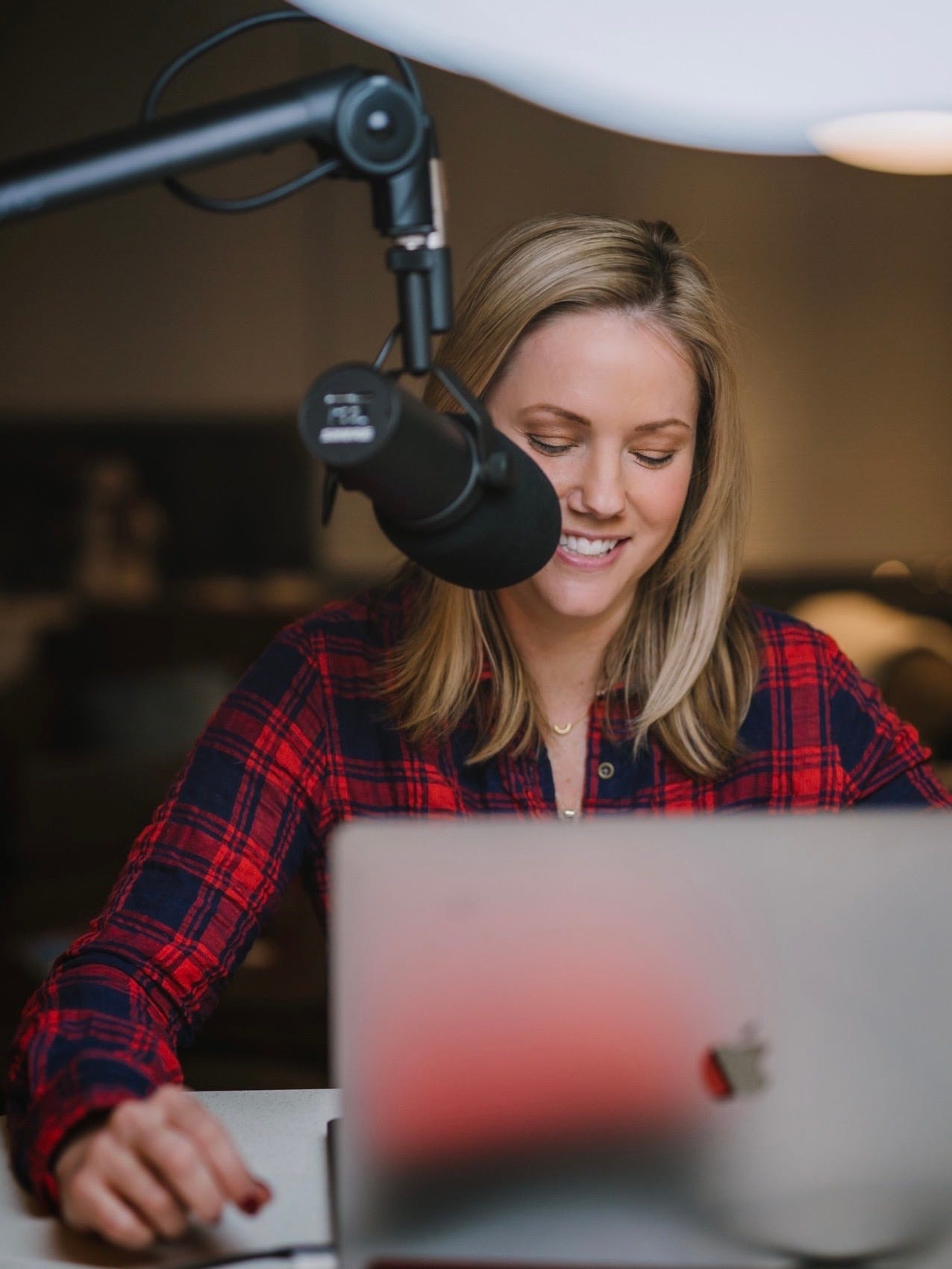
Yet, last week, Food Network Obsessed released episode #200 as we gear up to record our 20th season. I took a little trip down memory lane over on Instagram—reminiscing about how we launched the show out of my living room in 2021 before eventually building a home studio, and celebrating the Signal and Webby awards we’ve picked up along the way.
But in this age where “everyone has a podcast,” I wanted to use this space to dive a little deeper. Here is a look at what I’ve actually learned over the span of 200 episodes.
1. Go in with a plan, but be ready to go off-script
(See what I did there?) In my humble opinion, the best interview-based podcasts are the ones that feel like a genuine conversation. Ironically, achieving that spontaneous feel requires a solid plan. I always go into a recording well-researched and armed with a general outline. This ensures we hit any network directives, but more importantly, it eases my (undiagnosed) ADHD. Having something to fall back on when I completely blank is incredibly comforting. I might end up rearranging or tossing questions out entirely depending on where the guest takes the chat, but knowing that safety net is there relaxes me—allowing me to actually go off-script and be a better, looser interviewer.
2. Be a relentless listener
Speaking of which, some of my absolute favorite moments on the pod come from follow-up questions. While I have that general interview flow in front of me, I intentionally leave a good portion of the conversation open for exploration. If you’re curious about a passing comment, chances are the audience is wondering the same thing. Don’t be afraid to dive deeper to mine for those memorable anecdotes. I usually hate interrupting people, but every once in a while, stepping in with a simple, “Why do you think that is?” can unlock an entirely new, fascinating layer of the story. On the flip side, if a follow-up question pops into your head but the guest continues talking and the moment has passed, it’s also OK to edit yourself on the fly and just keep things moving.
3. Avoid the “double-barreled” question
Anyone who went through ESPN’s infamous Sawatski Interviewing Class knows this is a cardinal sin. Essentially, you never want to ask two questions at once. For example: “What made you want to open this restaurant, and what’s your favorite thing on the menu?” Human nature dictates that the guest will almost always answer the second question and completely forget the first one. It is always better to split them into two distinct thoughts rather than trying to be cute or efficient. Despite my training, I still do it from time to time, and I almost always regret it when the guest inevitably says “what was the first question again?”
4. Ask real questions that prompt real imagery
One of my biggest pet peeves from my sports days is when reporters say, “Talk about…” instead of actually asking a question. It is incredibly lazy and rarely produces a compelling answer. That said, I fully endorse asking someone to describe something.
“Describe those mornings growing up, helping your grandmother in the kitchen... what do you remember smelling or seeing in those early days?” (And yes, my example still has a question attached because those Sawatski interview bootcamps really worked!) But simply swapping in the word “describe” naturally prompts the guest to paint a more vivid, sensory picture, which is vital for an audio-only medium.
5. Accept that they aren’t all home runs
Maybe you’re having an off day. Maybe your guest is having an off day. Maybe the gremlins in your computer decided to act up and your tech is failing you. The list goes on and on. Not every single episode is going to win an award, and that is okay. The goal is to continue showing up prepared and aiming for consistency. Just like anything else, the reps make it feel more natural.
Looking back at that panicked twenty-something in the San Diego radio booth, terrified of filling 30 minutes of “live to tape” airtime, it’s funny how things work out. We all have to start somewhere. Sometimes, you just need a couple hundred reps to realize you were exactly where you were supposed to be all along.
I’ve always admired and been inspired by how you’ve been able to pivot in a way that threaded cooking and food into your career. Your tips are spot on (and remind me of why I love interviewing people for stories!) Would be interested to learn what post-production is like after you record.